
How Festive UX Design Can Transform the Online Shopping Experience

Festivals are emotional. They bring colour, excitement, anticipation, celebration, and a sense of togetherness and increasingly, much of that experience begins online. From discovering the perfect gift to browsing festive collections and finally completing a purchase, the digital shopping journey has become part of the celebration itself.
Yet many e-commerce websites still treat festivals as nothing more than a promotional opportunity. A banner is added, the discount changes, and a few festive products are placed on the homepage. The result may communicate that a sale is happening, but it doesn't necessarily make the customer feel like a festival is happening.
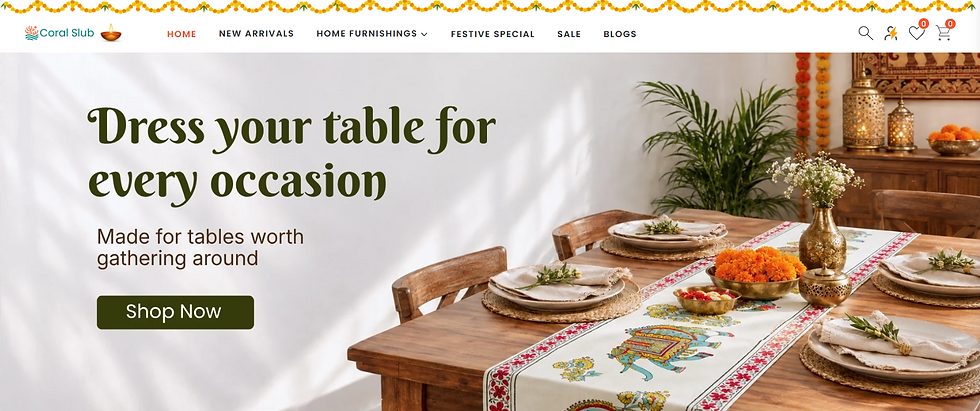
A well-designed festive shopping experience goes beyond adding decorations to a website. It uses thoughtful visual and interactive details to feel like a small part of the celebration rather than simply another product catalogue.
Start With the Feeling, Not the Decoration
First understand the emotion associated with the festival and then translate that emotion into the digital experience. A Diwali experience might use warmth, glow, anticipation, and togetherness. A festive gifting campaign could focus on joy, surprise, and generosity. A wedding-season collection might lean toward elegance and celebration. The visual language should support the feeling without overpowering the shopping experience.
This is where subtle design choices become powerful. A carefully selected festive colour palette, a delicate pattern in the background, a small decorative icon, or a gentle transition can communicate the season without turning the website into a digital greeting card.
Let Colours Set the Shopping Mood
Colour is one of the fastest ways to change how a digital experience feels. During a festive season, brands can introduce colours associated with the occasion while still maintaining their existing visual identity.
The key is restraint. Instead of replacing the entire brand palette with festive colours, designers can introduce them through selected touchpoints like
Promotional banners
Category highlights
Buttons
Badges
Icons
Subtle background elements.
This balance is particularly important for established brands. Festive design should feel like an evolution of the brand for the season, not like an entirely different website. When the colour system is handled thoughtfully, users experience the festive mood almost subconsciously.
Small Icons Can Carry Big Emotions
Festive icons are another simple way to introduce personality into an e-commerce journey. Diyas, stars, flowers, gift boxes, bells, leaves, lanterns, rangoli-inspired shapes, or other culturally relevant motifs can be incorporated into interfaces without becoming distracting.
These elements can appear around product categories, promotional sections, empty states, cart messages, or checkout moments. Even a small festive icon beside a message such as “Your gifts are almost ready” can make the experience feel more human.
The important thing is to use such elements as accents rather than decoration for decoration's sake.

Micro-Animations Make the Experience Feel Alive
Imagine a subtle sparkle appearing when a user adds a product to their cart, a tiny gift animation accompanying a festive offer, or a gentle glow around a limited-time collection. Even a small celebratory interaction after completing a purchase can create a moment of delight.
These animations work because they respond to the user's actions. Instead of simply looking festive, the website behaves festively.
However, subtlety is essential. Animations should be quick, purposeful, and lightweight. Too much movement can slow the experience, overwhelm users, and interfere with usability.
Make Product Discovery Feel Like Part of the Celebration
A festive shopping journey should not begin and end with a promotional banner. The feeling should continue as users explore the website. This changes the way users think about the products. They are no longer simply browsing inventory; they are discovering possibilities for their own celebration. Product storytelling, curated collections, gifting suggestions, festive photography, and contextual recommendations can make the browsing experience feel much more personal.
The Product Page Should Continue the Story
The festive mood should not disappear once a customer enters a product page. This is where many e-commerce experiences lose their emotional momentum.
Product pages can incorporate seasonal photography, festive badges, gifting information, occasion-specific recommendations, and small visual details that connect the product to the celebration. Copy can also shift from purely functional descriptions toward more contextual storytelling.
The product page should answer not only “What am I buying?” but also “Why does this belong in my celebration?”
Make Checkout Feel Like the Beginning of the Celebration
The cart is often treated as a purely functional step, but during a festive shopping journey, it can become an opportunity to reinforce excitement.
A simple message acknowledging the occasion, a thoughtful gifting suggestion, or a visual reminder of the festive collection can make the cart feel less transactional. Even something as simple as “Your festive picks are coming together” can change the tone of the experience.
This doesn't mean adding unnecessary distractions. The cart still needs to be clear, fast, and easy to use. The festive layer should complement the functionality rather than compete with it.

Festive UX Should Still Be Good UX
While emotional design can make a shopping experience memorable, it should never compromise usability. Festive visuals should not make text difficult to read. Animations should not slow down the interface. Decorative elements should not hide important information. Colours should still meet accessibility requirements, and navigation should remain intuitive.
Good festive UX doesn't ask users to notice the design. It allows them to simply feel the difference.
The brands that do this well understand that people don't shop during festivals only because they need products. They shop because they want to celebrate, gift, decorate, connect, and create memories. It should transform the shopping journey into an experience that feels connected to the occasion.
Author: DesignDelight Team
Category: UI/UX Design & E-Commerce
Keywords: festive UX design, e-commerce UX, festive website design, emotional design, festive e-commerce, micro-interactions, festive shopping experience, UI/UX design, customer journey, e-commerce conversion, seasonal web design, festive branding
Comments